
Seasonal Produce
The Vegetable Calendar — Tracking Seasonal Produce in a Weekly Food Journal
Eleanor Ashcroft
·
·
9 min read
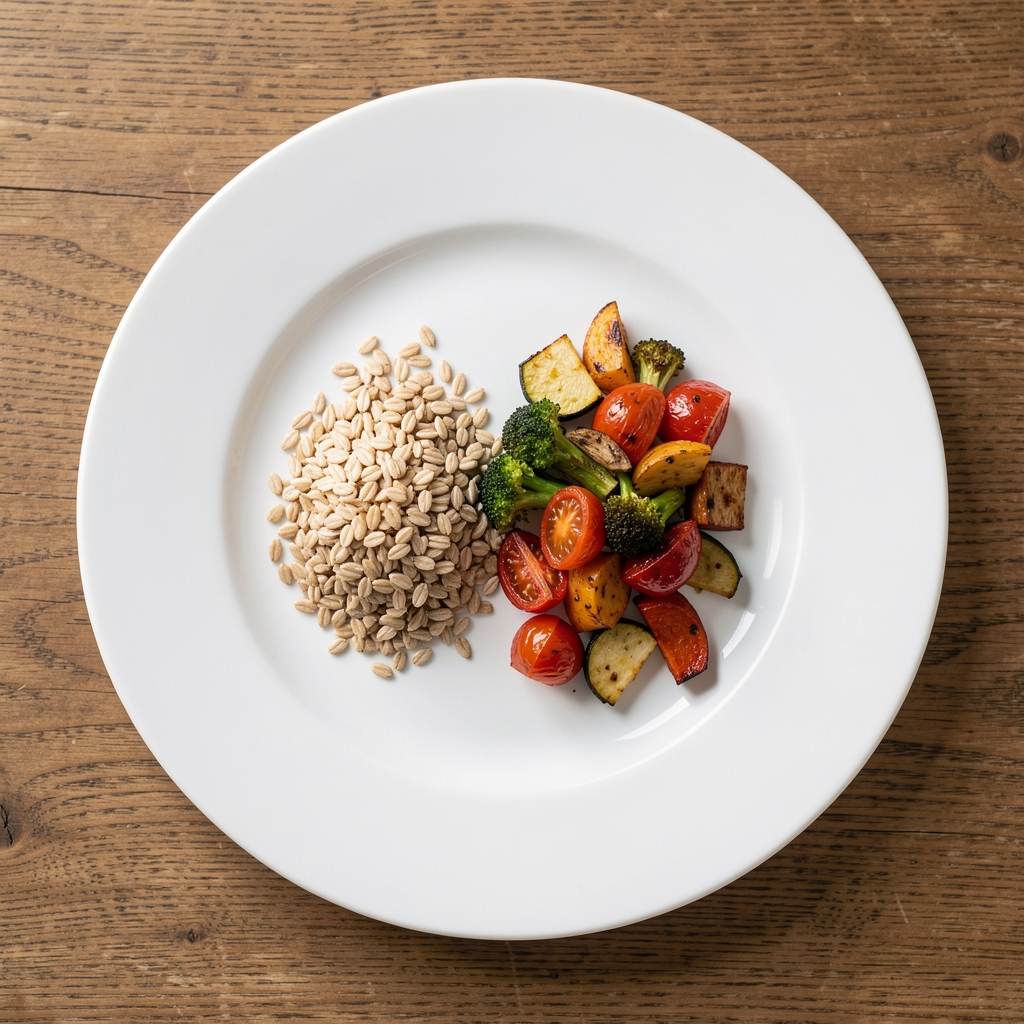
The architecture of a day's eating — the number of meals, the spacing between them, the ratio of different food groups on each plate — exerts a consistent influence on how the body manages energy and registers satiety. Understanding that architecture, rather than simply counting its contents, is a different and often more sustainable form of food awareness.
When the editorial team at Dreva Dispatch began reviewing food journal entries submitted by readers over a three-month period, one of the most consistent findings was not related to what was being eaten but to how the day's eating was structured. Meals were frequently skipped or substantially delayed in the morning, followed by a compressed eating window in the afternoon and evening. The total caloric and nutritional intake varied widely, but the structural pattern was remarkably consistent across very different food preferences and lifestyle contexts.
This structural observation aligns with a body of published nutritional research that examines the timing and spacing of meals in relation to energy balance and appetite. The research does not produce simple prescriptions: there is no single meal pattern that produces a universal outcome. But it does identify some consistent patterns. Eating the largest portion of the day's food in the evening, after an extended period without food during the day, tends to produce a different satiety experience than distributing food more evenly across the waking hours. The evening concentration of eating is not simply a choice — it is frequently the result of how the structure of the working day has been organised.
The food journal makes this structural pattern visible. Without a record, the individual experience of each meal stands alone — the morning's absence of breakfast does not appear in the memory of the evening's meal. With a record, the day's architecture can be reviewed as a whole, and the relationship between the morning's structure and the evening's composition becomes legible.

Whole foods composition, editorial photography
The word "portion" in nutrition writing has accumulated a specific technical meaning — a measured quantity of a food, calibrated against a reference standard. In the context of food journalling and everyday weight awareness, the more useful frame is the portion as a unit of observation rather than measurement. What proportion of the plate is occupied by vegetables? What proportion by protein-rich whole foods? What proportion by starchy carbohydrates? These proportional observations can be recorded quickly and accurately without weighing ingredients or consulting nutritional databases.
Over time, the journal will show whether the plate's proportions are consistent, variable, or systematically skewed in one direction. A journal kept over four weeks will frequently reveal that the proportion of vegetables on the plate is higher at the start of the week than at its end — a pattern that reflects the practical reality of shopping and meal preparation rather than any explicit nutritional intention. The vegetables bought at the weekend are present in volume on Monday and Tuesday, then diminish through the week as fresh produce is used up and the meal defaults shift toward quicker, starchier options.
This pattern is not a failure of willpower or nutritional knowledge. It is an architectural feature of the week's organisation. Recognising it as such — through the evidence of the journal rather than through retrospective self-assessment — makes it possible to address it as a logistical question: when is the second shopping trip of the week, and what does it prioritise?
"The journal does not ask why a meal was structured as it was. It records how it was structured, and that record, accumulated over weeks, is more informative than any single meal's analysis."
The weekly food rhythm — the observable pattern of how meals are composed and timed across seven days — is a more stable unit of nutritional observation than the individual day. Days are volatile: they respond to work schedules, social arrangements, travel, and the availability of ingredients. The week, viewed across its full span, tends to reveal a more stable underlying structure.
The journal's capacity to make that weekly rhythm visible is one of its primary functions in the context of weight awareness. Nutritional research consistently notes that the relationship between diet and weight is best understood over extended time horizons — weeks and months rather than individual days. The journal provides the material for that extended observation, turning the isolated meal into part of a legible pattern.
A useful exercise for the food journalist is the weekly plate audit: at the end of each week, review the journal and answer four questions. What was the most common vegetable on the week's plates? What was the largest single meal of each day, and at what time did it appear? How many days included a meal composed primarily of whole, unprocessed foods? How many days included a meal eaten quickly, without attention, while occupied with something else?
These questions are not designed to produce a score or a ranking. They are designed to make the week's architecture visible — to convert the accumulation of individual meals into a legible structural account of how food appeared in the week.
The relationship between portion awareness and weight change is, like most relationships in nutritional practice, indirect and cumulative rather than direct and immediate. An individual meal's composition does not produce a measurable change in body weight. The cumulative pattern of how meals are composed over weeks and months — the consistent presence or absence of certain food groups, the distribution of energy across the day, the proportion of the plate occupied by vegetables and whole foods — produces a shift in the body's overall nutritional state that can be reflected, over time, in weight.
This is why the framing of gradual weight change as an architectural question — a question about the structure and pattern of eating rather than the restriction of specific foods — is, in the editorial team's assessment, the more productive orientation for most people. The architecture can be adjusted without requiring the elimination of any particular food. The plate's proportions can be shifted toward a greater presence of vegetables and whole foods without the formal language of exclusion that often accompanies weight-focused dietary interventions.
The food journal supports this architectural adjustment by making the current pattern visible before any change is made. The baseline record — unmodified, accurate, reflecting what is actually eaten rather than what is intended to be eaten — is the most informative document available for understanding the current architecture of the daily plate and identifying where structural adjustments might be most effective.
Morning plate record, food journal observation, 2026
Home cooking occupies a particular position in the architecture of the nutritionally aware diet, not because of any nutritional superiority attributed to food prepared at home, but because of what the act of preparation makes possible: ingredient awareness. When a meal is assembled from its components in a domestic kitchen, the cook is aware of the proportions involved in a way that is unavailable when eating a prepared meal whose composition is not visible.
The food journal captures this awareness in a form that can be reviewed. A journal entry recording a home-cooked meal can note the vegetables used, their relative volume on the plate, the protein source, and the preparation method. A journal entry recording a prepared or restaurant meal records what was visible — but the compositional detail available to the home cook is absent.
This is not an argument for universal home cooking. It is an observation about information access: the cook who prepares a meal has access to the architecture of the plate before it is assembled, and that access can be used to make conscious adjustments to proportions in a way that eating a pre-prepared meal does not allow. The food journal reflects this difference, and for those interested in weight awareness through a nutritional lens, increasing the proportion of home-prepared meals in the weekly record is one of the most direct ways of increasing access to portion and composition information.

Eleanor Ashcroft is lead editor at Dreva Dispatch. Her writing draws on observational practice in food research and nutrition writing, with a focus on the structural and rhythmic dimensions of everyday eating.
More from Eleanor Ashcroft →